

Drinking hot beverages, including tea, has been linked in multiple scientific studies to an increased risk of esophageal cancer, particularly esophageal squamous cell carcinoma. The International Agency for Research on Cancer (IARC), part of the World Health Organization, classified drinking beverages above 65°C as “probably carcinogenic to humans” (Group 2A), based on evidence of thermal injury leading to chronic inflammation of the esophagus.
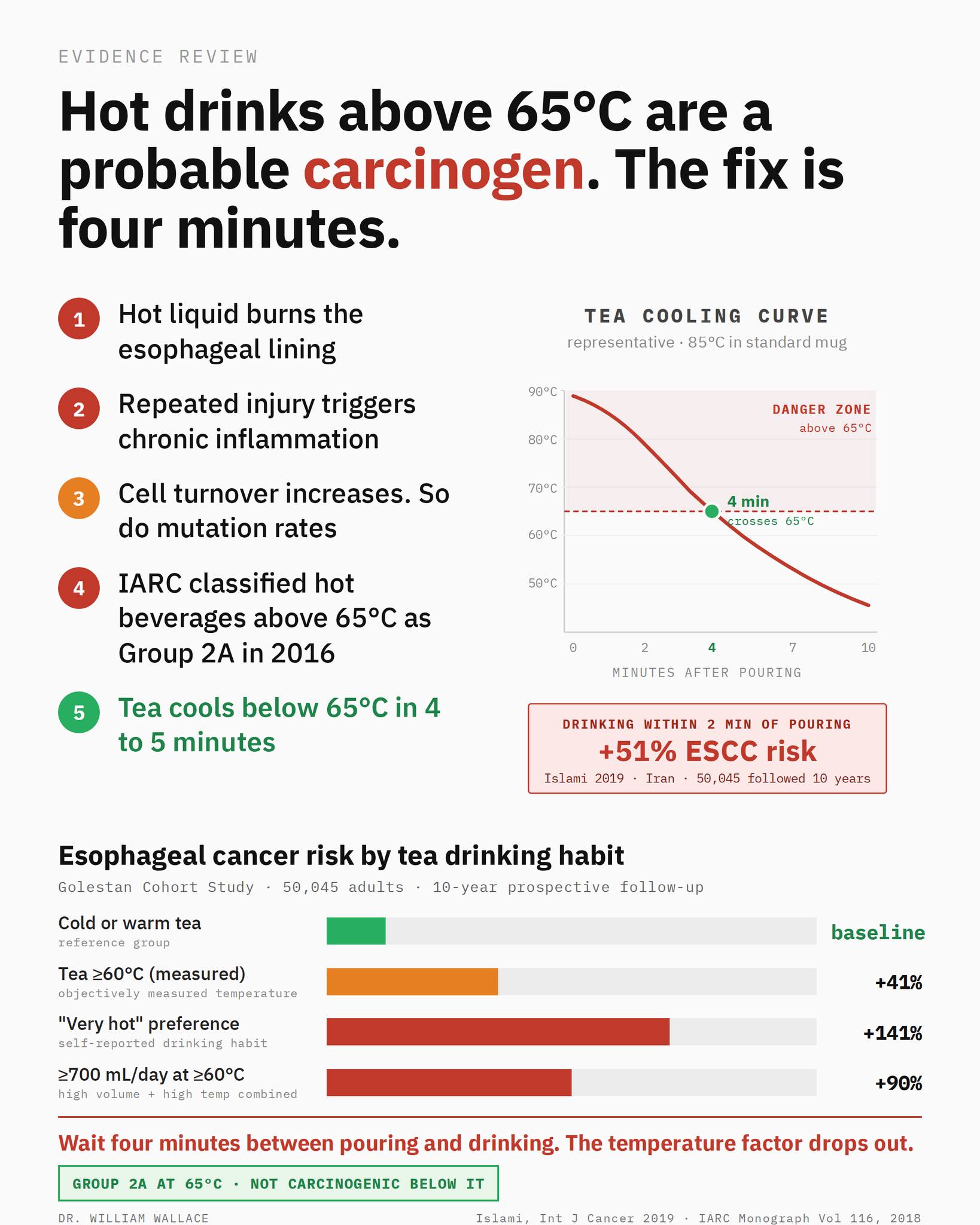
Large-scale population studies, including research published in the International Journal of Cancer, have found associations between high-temperature beverage consumption and increased cancer risk. One major cohort study in northeastern Iran observed higher rates of esophageal cancer among individuals who reported drinking tea at very high temperatures or consuming it immediately after pouring. Similar findings have been reported in other regions with high rates of esophageal cancer, including parts of East Africa.
Researchers explain that the likely mechanism involves repeated heat damage to the lining of the esophagus, which can trigger inflammation and increase cell turnover over time. While the relative risk is elevated in these studies, experts note that the absolute risk for most individuals remains low, and that factors such as smoking, alcohol use, and diet also play significant roles in esophageal cancer development.
Islami, Int J Cancer 2019: pubmed.ncbi.nlm.nih.gov/30891750/ Middleton, Int J Cancer 2019: pubmed.ncbi.nlm.nih.gov/30496610/
Related posts:
 MCH Entertainment: Things You Need to Know About Disney’s ‘A Wrinkle in Time’
 Book of Mormon Comics: An Andrew Knaupp Interview
 Latter-day Saint Comedian Stacey Harkey of Studio C Comes Out as Gay, Shares Message to LGBTQ Youth
 Ensign College Plans for More Face-to-face Classes to Push Through in Fall 2021