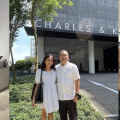
Jason Nelson, an American actor based in South Korea, has built an unconventional career in one of the world’s most competitive entertainment industries after first arriving in the country as a missionary more than a decade ago.
Nelson originally came to Korea in 2007 for a two-year missionary assignment for the Church of Jesus Christ of Latter-day Saints following high school. What began as a short-term religious service eventually laid the groundwork for a long-term personal and professional connection to the country. After returning to the United States, he later revisited Korea in 2015, where renewed relationships and growing opportunities led him to remain.
Since then, Nelson has steadily worked his way into Korean film and television, making his entertainment debut in 2016 on the talk show SBS Morning Wide. He has since appeared across a range of productions, including films such as The Outlaws, The Merciless, Real, Bounty Hunters, and Mr. Zoo: The Missing VIP, as well as television dramas including Man to Man, Welcome to Waikiki, and Born Again. His most widely recognized role came in the Netflix historical drama Mr. Sunshine, where he portrayed an American missionary—echoing his own lived experience in Korea.
Nelson describes his path into acting as partly opportunistic and partly driven by curiosity sparked during his missionary years, when he first observed foreign performers on Korean television. Yet the transition into the industry has not been without friction. He has spoken candidly about the saturation of foreign talent in Korea’s entertainment market, particularly following the global rise of K-pop and Korean drama exports, which increased competition for limited roles.
Language, he notes, remains the most persistent barrier. While he learned to read Korean relatively quickly, achieving fluency in grammar and nuance has taken years of sustained effort. Cultural adaptation, by contrast, he describes as comparatively smooth, crediting Korean society and everyday life as welcoming and accessible for long-term integration.
Beyond professional work, Nelson’s personal life has become deeply rooted in Korea. He married a Korean partner he reconnected with after his initial missionary period, and the couple now has a child and a home in the country.
Despite the challenges of sustaining a career as a foreign actor in Korea, Nelson frames his experience less as a linear success story than as a gradual accumulation of opportunities shaped by timing, language learning, and cultural immersion. His trajectory reflects a broader trend of foreign creatives navigating Korea’s increasingly global—but still tightly competitive—media landscape, where visibility is expanding even as entry barriers remain sharply defined.