
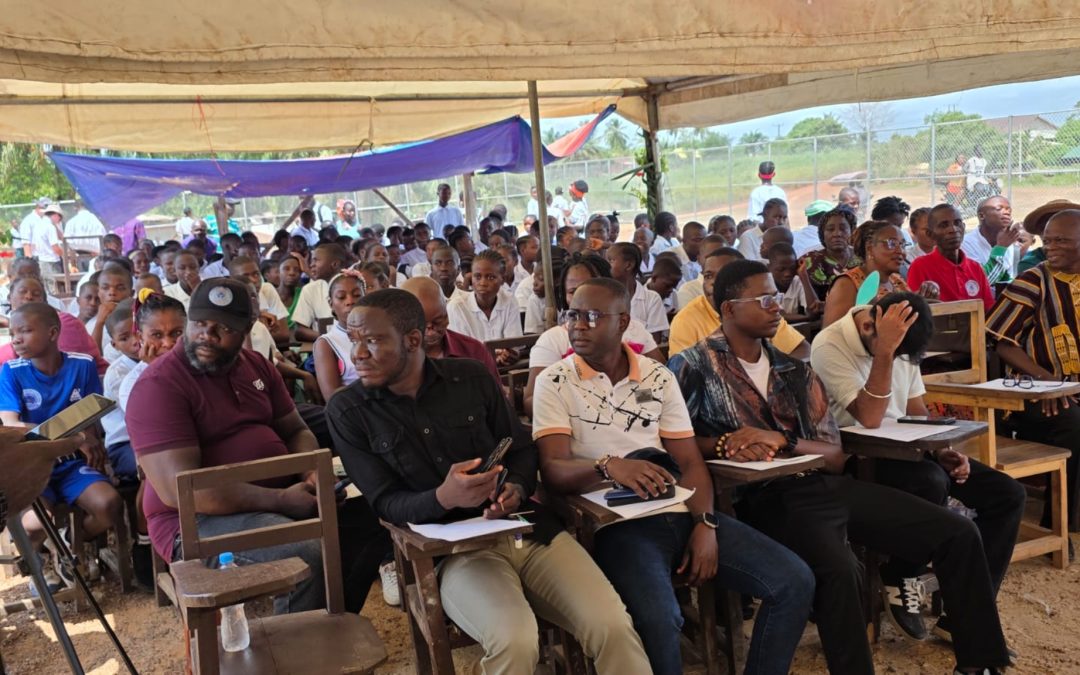
In the provincial capital of Gbarnga, a modest but carefully designed school complex is offering a glimpse of how early education in Liberia might evolve. Earlier this month, The Church of Jesus Christ of Latter-day Saints formally transferred a newly built early childhood education facility to the government, marking a small yet symbolically potent investment in a sector long constrained by limited infrastructure.
The project, developed in partnership with Liberia’s Ministry of Education, reflects a broader recognition among policymakers and donors that learning outcomes are shaped well before children enter primary school. The campus includes six classrooms equipped for young learners, alongside sanitation systems scaled to children and access features for those with disabilities—still a rarity in much of the country.
Infrastructure, often an afterthought in rural education planning, appears central to the design. A dedicated water supply, perimeter fencing and solar power aim to ensure both safety and continuity—practical considerations in a region where utilities can be unreliable. Such provisions may prove as consequential as the curriculum itself in determining whether schools function consistently.
Officials at the handover ceremony framed the facility as more than a physical asset. Representatives from the education ministry emphasised the long-term economic logic of early childhood investment, arguing that cognitive and social development at a young age underpins later productivity. Their rhetoric aligns with a growing body of global evidence linking early learning to improved lifetime outcomes, though translating theory into practice remains uneven across Liberia.
The involvement of a religious organisation underscores the continued importance of non-state actors in filling public service gaps. Faith-based groups have historically played a significant role in Liberia’s education system, particularly outside major urban centres. This project suggests a model in which such actors complement, rather than substitute for, state provision.
Local leaders have pledged to maintain the facility, an often overlooked but decisive factor in the longevity of donor-funded projects. Whether that commitment endures will determine if the school becomes a durable institution or another well-intentioned but short-lived intervention.
For now, the new centre stands as a test case. If it succeeds in delivering consistent, inclusive early education, it may offer a template for replication in other parts of the country—where the foundations of learning are still, quite literally, under construction.
Related posts:
 Church Clarifies Caffeine Use to Latter-day Saints
 Church Leaders Encouraged Members To Extend Love And Encouragement To The LGBT Members
 Church Members In West Virginia Have Been Identified As Safe After Major Flooding In West Virginia
Church Representatives Support Prayer Breakfast at UK Parliament
Church Members In West Virginia Have Been Identified As Safe After Major Flooding In West Virginia
Church Representatives Support Prayer Breakfast at UK Parliament