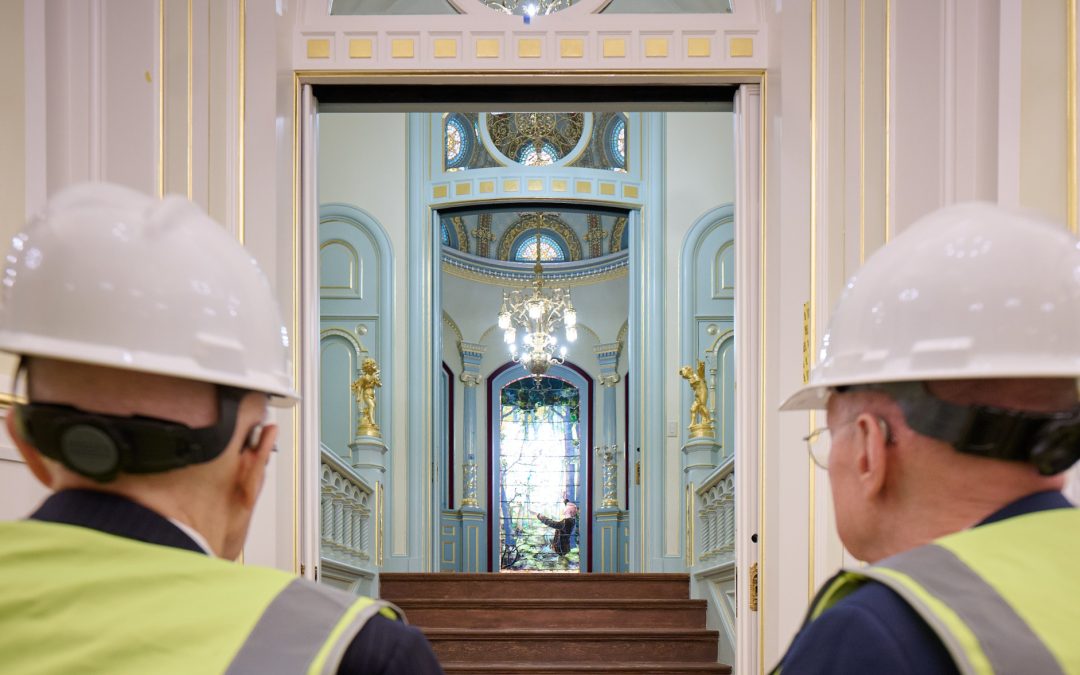
President Dallin H. Oaks has released what is believed to be the first publicly published photograph in more than 100 years of the Holy of Holies inside the Salt Lake Temple, offering a rare glimpse into one of the most sacred spaces in the Church of Jesus Christ. The image was shared as the Church’s years-long renovation of the historic temple nears completion ahead of its planned public open house in 2027.
The Holy of Holies is a restricted room within the temple that is generally closed to Church members and the public. According to the Church, the room is reserved for the Prophet and President of the Church, who may go there for private prayer, meditation, and seeking divine guidance on major matters affecting the worldwide Church. Because of its sacred significance, photographs and public descriptions of the room have been extremely rare throughout the temple’s history.
The photograph was released during a May 8 visit in which the First Presidency toured several completed portions of the temple renovation project. During the visit, leaders viewed restored architectural details, updated interiors, and sacred ordinance rooms that are being carefully preserved as part of the extensive modernization effort. The renovation, which began in 2019, includes major seismic upgrades intended to strengthen the temple while maintaining its historic design and spiritual significance.
The Salt Lake Temple is considered the centerpiece of Temple Square and one of the most recognizable landmarks of the Church. First dedicated in 1893 after decades of construction, the temple has long served as a symbol of the faith for millions of Latter-day Saints worldwide. Church leaders have said the upcoming 2027 open house will allow members of the public to tour the interior of the building before it is formally rededicated for worship and sacred ordinances.
The release of the Holy of Holies photograph has drawn significant attention among Church members and historians, many of whom view it as an unprecedented moment of transparency regarding one of the faith’s most sacred spaces. While the room itself will remain inaccessible to the public, the image provides a rare historical and spiritual look inside a location that has traditionally remained unseen for generations.