
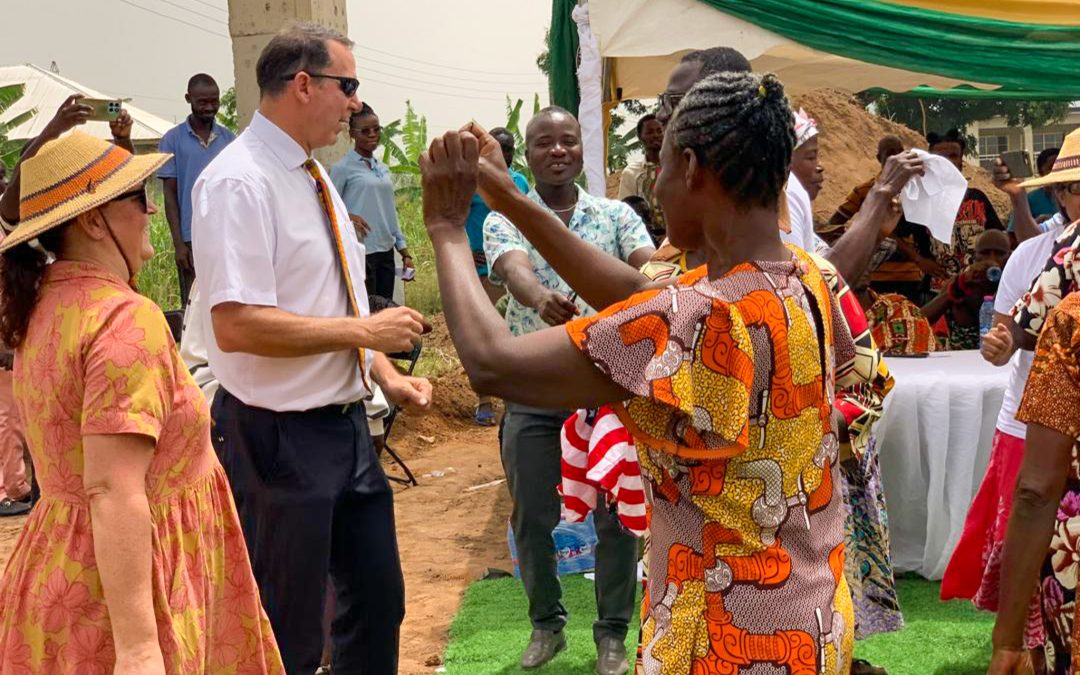
Two rural communities in Ghana’s Ashanti Region are celebrating the arrival of reliable clean water after decades of scarcity, following the installation of mechanized borehole systems serving thousands of residents.
The neighboring communities of Nintin and Hwidiem officially received the water systems during a handover ceremony on February 18. The project, funded by The Church of Jesus Christ of Latter-day Saints, is expected to benefit more than 5,000 farmers and their families.
For more than 20 years, residents in the area relied on a small stream located roughly a kilometer away as their primary water source. The water was often stagnant and unsafe, contributing to health problems including Schistosomiasis, Cholera, Typhoid fever, and persistent cases of diarrhea.
The daily task of collecting water frequently fell to children, many of whom had to walk long distances before school. Local educators reported that the burden contributed to frequent absenteeism, late arrivals, and declining academic performance among students.
The situation worsened after the construction of a major road damaged some of the limited water sources that remained accessible to the villages. Although several organizations previously attempted to drill wells, most projects failed because they reached only shallow groundwater that dried up quickly.
This time, specialists studied the region to identify more reliable underground water reserves. Contractors drilled much deeper — about 180 meters — ultimately reaching a stable aquifer. The resulting boreholes were equipped with mechanized pumping systems designed to provide consistent access to clean water.
Community leaders gathered for the handover ceremony, including traditional authorities such as the queen mother of Nintin and the subchief of Hwidiem, along with local government officials and church representatives.
“This time they found water at a much deeper level, and it is clean,” said Nana Adu Gyamfi, subchief of Hwidiem. “We are very grateful.”
Queen Mother Okyekyerekuro Afia Anoswa II also expressed appreciation on behalf of residents, offering thanks to the church and its supporters worldwide.
Church leaders said the project was funded through donations from members around the world. According to President Richard Osei-Yaw, leader of the Ejisu Ghana Stake, members contribute through monthly charitable donations known as fast offerings, which support humanitarian projects such as water access initiatives.
Beyond improving sanitation and public health, community leaders say the new water systems could have broader benefits — allowing children to spend more time in school and reducing the daily burden on families.
Residents who attended the ceremony described the project as a turning point for the two farming communities. With reliable water now available nearby, many say daily life will become safer, healthier, and more manageable.


Latest posts by Moroni Channel News (see all)
- LDS-Christians build medical center and gives it to the people of Africa for free - March 16, 2026
- Church of Jesus Christ brings clean water to 5,000 African farmers - March 16, 2026
- First Presidency invites world to Palm Sunday and Easter General Conference - March 16, 2026
- Christian missionary injured in suspected machete attack in Papua New Guinea - March 15, 2026
Related posts:
 Church Clarifies Caffeine Use to Latter-day Saints
 Church Leaders Encouraged Members To Extend Love And Encouragement To The LGBT Members
 Church Members In West Virginia Have Been Identified As Safe After Major Flooding In West Virginia
Church Representatives Support Prayer Breakfast at UK Parliament
Church Members In West Virginia Have Been Identified As Safe After Major Flooding In West Virginia
Church Representatives Support Prayer Breakfast at UK Parliament