
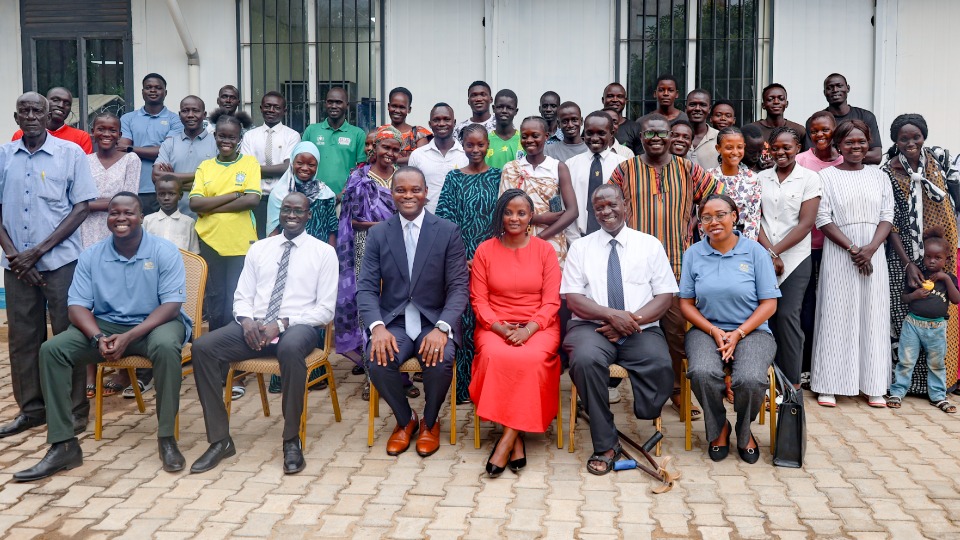
JUBA, South Sudan — The Church of Jesus Christ of Latter-day Saints has officially launched BYU-Pathway Worldwide in South Sudan, expanding access to affordable online higher education, professional certificates and English-language learning opportunities.
The program was introduced during a special devotional in Juba on September 9, attended by Church leaders, members, media representatives and friends of the Church.
Through BYU-Pathway Worldwide, students in South Sudan can now pursue online certificates and degrees in areas including business, technology, health, professional studies, family and human services, and applied communication. Students may also participate in EnglishConnect, which is designed to help improve English proficiency and prepare participants for further education and employment.
BYU-Pathway Worldwide traces its roots to 2009, when PathwayConnect began with 50 students in the United States. The program expanded into Africa in 2011, and BYU-Pathway Worldwide was established in 2017 to oversee the Church Educational System’s growing online higher education programs.
Today, BYU-Pathway serves more than 88,000 students annually in more than 180 countries and territories, with certificates and degrees offered in partnership with BYU-Idaho and Ensign College.
Dr. Victor B. Ukorebi, senior manager for BYU-Pathway Africa, helped lead the launch in Juba and said education through the program could create new opportunities for students and strengthen families and communities.
“The members that will key into this and take advantage of this education will go places,” Ukorebi said. He added that education could help participants develop leadership skills and improve their employment prospects.
Local Church branches will also provide support to prospective students during registration and study. According to the Church, branch facilities can offer internet access, computers and study space for students who may not have reliable connectivity or suitable learning environments at home.
Church leaders and volunteers will also help applicants navigate the enrollment process.
Grace Ninsiima, BYU-Pathway area manager for the Africa Central Area, said there had already been strong interest in the program in South Sudan and encouraged prospective students to apply ahead of upcoming enrollment deadlines.
“I have high hopes for South Sudan,” Ninsiima said, pointing to strong English proficiency and growing interest in the program.
Local Church members also welcomed the launch, saying it could make higher education more accessible without requiring students to leave the country.
Mary Achol, a member of the Juba Branch, said she had hoped to enroll in BYU-Pathway in 2025 but was unable to do so before the program became available locally. She said the cost was more affordable compared with universities in neighboring Kenya and Uganda, as well as some institutions in South Sudan.
Another participant, Alex Mana Sebit, said access to online education could reduce the need for students to travel abroad for higher education.
“We do not have to go to Kenya or Uganda to receive a high-quality education,” he said. “We can get it here in South Sudan.”
The Church said students in South Sudan will pay an affordable amount per credit, with the goal of reducing financial barriers to higher education.
The launch is part of a broader effort by the Church to promote education, employment readiness and self-reliance. Through BYU-Pathway, students can combine academic study with spiritual learning while working toward certificates and university degrees.
As enrollment begins in South Sudan, Church leaders said the program could help students gain professional skills, improve employment prospects and make broader contributions to their families, workplaces and communities.
Related posts:
 Church Clarifies Caffeine Use to Latter-day Saints
 Church Leaders Encouraged Members To Extend Love And Encouragement To The LGBT Members
 Church Members In West Virginia Have Been Identified As Safe After Major Flooding In West Virginia
Church Representatives Support Prayer Breakfast at UK Parliament
Church Members In West Virginia Have Been Identified As Safe After Major Flooding In West Virginia
Church Representatives Support Prayer Breakfast at UK Parliament